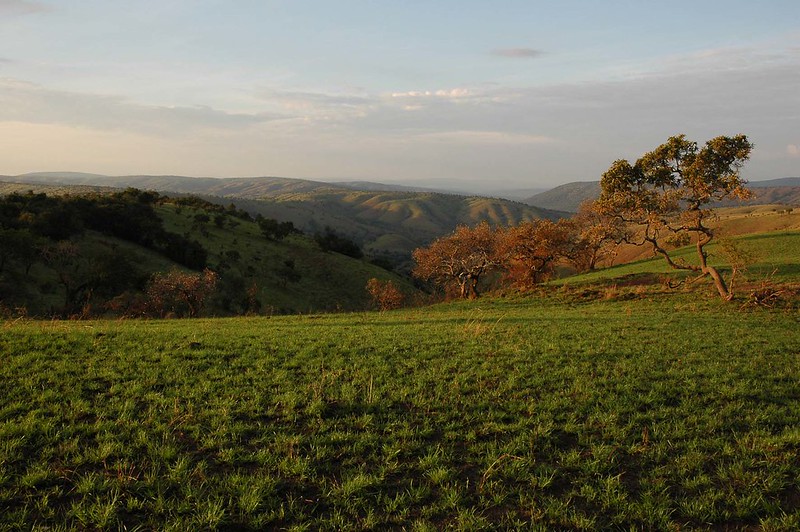
Akagera charges an entry fee per person per day or night, currently 100 US dollars for an international adult, 50 for residents and Pan African visitors, and 15,000 Rwandan francs for Rwandan and East African citizens, with a separate vehicle fee and every activity priced on top. Children under six are free. Akagera national park sits in eastern Rwanda, about 110 kilometres from Kigali.

The figures below come from the park’s own published tariff. Two things about it are worth knowing before you start adding up. Almost nothing is bundled, so a day here is entry plus vehicle plus whatever you actually do. And the fee structure rewards staying inside the park, in a way that changes the maths of a longer trip considerably.
Akagera National Park Entrance Fees for a Safari
Entry is charged per person, per day for day visitors and per night for anyone sleeping inside the park. It covers self drive game viewing, which is a genuinely useful inclusion: with your own vehicle you can drive the tracks all day without paying anything further.
Rates depend on residency, and the park verifies it. Bring documentation, because without proof you will be charged the international rate. Children of five and under pay nothing at all, neither entry nor activity fees. Children between six and twelve pay reduced rates. Anyone thirteen or over pays adult rates for everything.
Groups of more than twenty Rwandan nationals receive an automatic twenty percent discount, bringing adult entry to 12,000 francs and children to 8,000.
How the Multi Night Discount Works
This is the detail that decides whether staying inside the park is expensive or cheap, and most visitors miss it entirely.
If you sleep inside Akagera, the entry fee is charged per night, and it reduces by fifty percent for the second and third nights. From the fourth night onwards it is not charged at all, for stays of up to a week. So an international adult staying two nights pays 100 dollars for the first and 50 for the second, a total of 150, and gets the days either side of those nights included. Three nights costs 200. A week costs the same 200.
Compare that with staying outside the boundary. Visitors sleeping outside the park count as day visitors and pay the full entry fee for every single day they drive in. Two nights at a lodge outside the fence, entering on three separate days, costs an international adult 300 dollars in entry alone against 150 for the same trip inside. For a couple that gap is 300 dollars, which is most of the accommodation saving people think they are making. Some partner lodges outside the boundary have arrangements giving guests a reduced rate on subsequent entries, so ask directly rather than assuming.
Vehicle Fees for a Self Drive Safari
Vehicles are charged separately from people. On the park’s current published list, a car or minibus pays 10 US dollars, and an omnibus, bus or overlander pays 20. This is a single charge for the vehicle rather than per person or per day.
Two rules matter more than the money. Buses larger than a coaster are not permitted to drive in Akagera at all. And every bus or minibus entering the park is required to take a guide, at its own cost, which is worth building into a group budget. During the rainy season coasters are also refused entry to the low lying areas in the north, including Kilala, Mohana and the Giraffe Area, which flood.
Guide Fees and the Timing Rules That Change Them
A park or community freelance guide riding in your own vehicle costs 25 US dollars for a half day and 40 for a full day. That is per guide, not per person, which makes it the best value item on the whole tariff for a family or a group.
The rules deciding which rate applies are specific. A guide collected from reception before nine in the morning and returned within five hours is a half day. Collected after nine, it is a full day unless the guide is back before midday. Collected after midday, half day. And any guide travelling through the park with you and exiting via the northern gate is charged a full day regardless of the hours involved, because they then have a long trip back. If you exit north, drop your guide at Kayonza, or cover their transport from the north gate to Kayonza, which will not exceed 5,000 francs. Should a guide accompany you overnight to Karenge Bush Camp, an extra 20,000 francs covers their accommodation and food. More on the people behind this is on the community freelance guides page.
Game Drive and Night Drive Safari Costs
If you arrive without a suitable vehicle, the park hires out its own with a driver and a guide. A half day drive of up to five hours costs 200 US dollars and a full day 350, for a vehicle seating a maximum of seven, and those prices are for the vehicle rather than per person. Pick up and drop off are within the southern sector only. Half day drives run half past six to half past eleven or midday to five, and full days half past six to five.
The night drive is priced per person: 40 dollars for adults and 25 for children of six to twelve, for about two and a half hours in a park vehicle with driver and guide. It leaves at half past five and returns between eight and half past eight, with a minimum of two passengers and a maximum of twelve, and you are collected from your accommodation. It runs in the south of the park and separately from Karenge in the north. Full detail on both sits on the game drives page.
Boat Trip and Fishing Costs on a Lake Ihema Safari
A scheduled boat trip on Lake Ihema costs 35 US dollars per adult and 20 per child for the morning and afternoon departures, rising to 45 and 30 for the sunset run. Each lasts about an hour, with a minimum of two passengers. Departures are at half past seven, nine, three and half past four.
Private boats are charged for the boat rather than per head: 200 dollars for the smaller vessel taking up to eleven passengers, and 360 for the larger one taking up to sixteen. These run outside the scheduled times, starting between half past ten and half past one, and need booking in advance.
Sport fishing at Lake Shakani costs 25 dollars per person per day for adults and 15 for children of six to twelve, using your own equipment. Bring tackle; the limited gear available for hire runs out.
Camping and Lodge Costs for an Overnight Safari
Camping is the cheapest way to sleep inside the fence. A night at Muyumbu, Shakani or Mutumba costs 25 US dollars per person for adults and 15 for children, with a reduced rate for Rwandan nationals of 15 and 10. Mihindi costs more because breakfast is included, at 50 and 30 for adults and children, or 40 and 20 for Rwandan nationals. Hiring a six person canvas tent for the southern sites costs 30 dollars and does not include bedding. Firewood is provided. Full detail is on the camping page.
Above that, the park’s own two properties charge around 227 dollars per person sharing in low season and 258 in high season for a standard tent, full board, with Ruzizi’s tree top tent at roughly 315 and 361. Rwandan and East African citizens and residents pay around 170 and 186. Children of six to twelve are about 119. The large lodge in the southern sector sits in the middle of the market, commonly quoted from around 270 dollars for a single and 360 for a double with meals, and the private concession camps in the north run into the thousands per person per night with a conservation levy of 150 dollars per person per day on top. The Akagera hotels and lodges page compares them all.
Cultural Tour, Walk the Line and Behind the Scenes Costs
The activities run with the community and the park’s own staff are the cheapest things on the list and the ones fewest visitors book.
A community cultural experience costs 30 US dollars per adult and 20 per child for a half day, with a minimum of three people. Walk the Line, the seven kilometre walk along the outside of the boundary fence, is the same, 30 and 20, minimum three, taking about two hours. The Behind the Scenes tour of park headquarters costs 25 dollars per adult and 15 per child, needs a minimum of four, runs an hour and a half, and there is a group rate of 180 dollars for parties of eight or more.
Annual Passes, Fines and Other Charges
Anyone visiting Akagera repeatedly should look at the annual pass, which gives unlimited entry for a year on a single payment. Rwandan and EAC citizens pay 95,000 Rwandan francs for a single pass, 150,000 for a couple and 205,000 for a family. Rwandan and EAC residents pay 300 US dollars, 500 and 700 for the same three. The pass covers entry permits but not the vehicle fee or activities, though holders receive a ten percent discount on activities.
Then the charges nobody plans for. A vehicle recovery, if you break down or get stuck, costs 70 dollars, rising to 150 for a coaster. Breaking park rules carries a fine of 150. A helicopter landing inside the park costs 50 per landing. Commercial filming or photography is 400 dollars a day and must be arranged with the park in advance. Researchers pay a 200 dollar research fee, with ranger assistance at 25 dollars a day where they need to leave their vehicle.
What an Akagera Safari Actually Costs: Worked Examples
Numbers on a tariff are one thing; a day out is another. Three realistic cases, excluding fuel, food and getting there.
The pattern is clear enough. Entry dominates a short visit, accommodation dominates a long one, and the guide is the smallest line on the page while making the largest difference to what you actually see.
Paying, Booking and Cancellation Rules
Akagera is cashless. Payment is by credit card, Visa or Mastercard, bank transfer, mobile money through MTN MoMo, or Direct Pay Online. Entry fees can be paid at reception on arrival, or invoiced in advance if you would rather arrive with nothing to settle.
Activities are a different matter. Boat trips, night drives and the Behind the Scenes tour have limited capacity and should be booked ahead, with a deposit of at least half to confirm, and nothing is held until payment clears. To book, contact park reception with your name, phone number, the activity and date, the number in your party including children’s ages, and whether you want invoicing in francs or dollars.
Cancellations must be in writing and carry charges: twenty percent if you cancel more than thirty days ahead, thirty percent more than seven days ahead, fifty percent inside seven days, and the full amount once the activity was due to start. If the park cancels for weather or any other reason, you get a full refund. No shows and late arrivals are not refunded, though management may offer an alternative time.
Getting There and the Best Time for Your Safari
The southern gate is about 110 kilometres from Kigali, two to two and a half hours by road, with reception three kilometres beyond it. Gates run from six in the morning to six in the evening and the far northern gate is exit only. Directions are on the getting there page.
Park entry fees do not change with the season, which is unusual and worth knowing. Accommodation does. The lodges price high season from the middle of December to the end of February and from June to the end of September, with the shoulder months noticeably cheaper. Game viewing is best in those same dry months, so the cheapest time to come is also the greenest and the quietest, and the trade off is tall grass and softer tracks.
Frequently Asked Questions About Akagera Fees and Costs
How much is entry to Akagera National Park?
Currently 100 US dollars per day or night for an international adult, 150 for two nights and 200 for three. Foreign residents of Rwanda or the East African Community pay 50, 75 and 100. Rwandan and EAC citizens pay 15,000, 22,500 and 30,000 Rwandan francs. Pan African visitors from outside the region pay 50, 75 and 100, halving again if they are also EAC residents. Children six to twelve pay reduced rates and children five and under are free.
Is the entry fee cheaper if I stay longer?
Yes, and substantially so if you sleep inside the park. The fee halves for the second and third nights and is not charged at all from the fourth night onwards, up to a week. Staying outside the boundary means paying full entry for every day you drive in, with no reduction whatsoever.
What is included in the entry fee?
Self drive game viewing, which means you can drive the park’s tracks for the day at no extra charge in your own vehicle. Everything else is extra: guides, boat trips, night drives, fishing, camping, cultural visits and the park’s own vehicle hire. The vehicle fee is also separate.
How much does a guide cost, and is it worth it?
25 US dollars for a half day and 40 for a full day, per guide rather than per person, riding in your own vehicle. For a first visit it is the best money you will spend here, because guides know where animals have been in recent days and can read the bush in ways a map cannot. Coaster buses are required to take one regardless.
Do children pay full price?
No. Children five and under pay nothing at all, for entry or activities. Children between six and twelve pay reduced rates across the board, roughly half on entry and lower rates on most activities. From thirteen upwards, adult rates apply to everything.
Can I pay in cash at the gate?
No. The park is cashless and takes credit card, bank transfer, mobile money or Direct Pay Online. You can settle entry at reception on arrival, or ask to be invoiced in advance. Bring a card that works internationally rather than relying on one method.
Is an annual pass worth buying?
If you live in Rwanda and expect to visit more than twice, almost certainly. A single pass costs 95,000 francs for citizens or 300 dollars for residents, against 15,000 francs or 50 dollars per visit, so it pays for itself quickly. It covers entry only, not the vehicle fee or activities, though it does carry a ten percent discount on activities.
If you would rather see the whole thing as one figure than assemble it line by line, the operators listed on our Rwanda safari companies page will quote park fees, vehicle, guiding, activities and accommodation together, and can price the same trip staying inside and outside the park so you can compare properly.
Ask for the breakdown rather than just the total. A quote that separates park fees from the operator’s own margin tells you a great deal about who you are dealing with.